Pillows & Sleep Comfort
Finding the Right Loft in a Shredded-Latex Pillow
A pillow can feel inviting when you first lie down and still leave your neck working against it hours later. Loft, fill distribution, sleep position, and mattress feel all shape the fit. Learning to adjust them patiently can turn guesswork into a more useful nightly test.
At bedtime, comfort can seem simple: a soft surface, a quiet room, a light switched off. But the small space between the head and mattress has its own geometry. If a pillow is too high or too low, the neck may rest at an angle that feels fine for a few minutes and less fine by morning. If its filling shifts, the pillow’s apparent height can change as the night goes on.
That is why loft—the height of a pillow under the head while it is being used—matters more than how tall it looks on a bed. Loft is not a fixed measurement of comfort. It depends on how much the filling compresses, where the sleeper’s shoulder rests, whether the person sleeps on their side or back, and how yielding the mattress is.
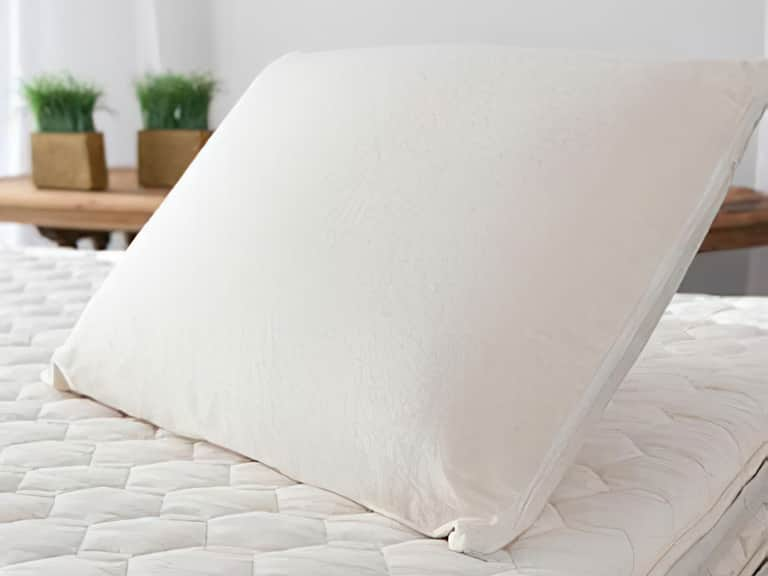
The Suite Sleep Shredded Latex–Tencel blend pillow combines shredded latex with a Tencel and recycled-fiber blend. Its filling is designed to provide a supportive, adjustable feel, and extra fill is available. That creates an opportunity to fine-tune the pillow—but adjustment works best as a deliberate process, not a nightly contest of adding and removing handfuls.
The goal is not to find a universally perfect pillow height. It is to find a setup that lets the head feel supported, the neck feel unstrained, and the body settle naturally in the sleeping position used most often. A few careful observations, followed by small changes and several nights of testing, can reveal more than a quick first impression.
What pillow loft actually describes
Loft is commonly used to mean a pillow’s height, but the useful question is how high it remains under a person’s weight. A pillow may look lofty when fluffed and compress considerably once the head rests on it. Another may appear modest in the morning but hold its shape more firmly through the night.
With shredded fill, the contents are made of small pieces rather than one solid molded shape. The pieces can move and settle, allowing the pillow to be shaped or redistributed. That flexibility can be helpful: a sleeper may gently shift filling toward the areas where support is needed. It also means that the surface can become uneven if the pillow is not fluffed or arranged to suit the sleeper.
In the Suite Sleep pillow, shredded latex provides the core of the supportive feel, while the Tencel and recycled-fiber blend contributes to the surrounding material and breathability. The result is different from a single-piece molded latex pillow. A molded design keeps a set outline; a shredded pillow offers a more malleable fill arrangement. Neither format is automatically better. The right choice depends on the sleeper’s preference for a defined shape or a pillow that can be adjusted and repositioned.
Loft also changes with time. Filling settles through use, the pillow can be compressed by a tucked arm or folded edge, and some sleepers naturally reshape it during the night. A fit assessment should therefore consider the pillow after it has been arranged for sleep—not merely its height straight out of storage.
Start with sleeping position, then account for the mattress
Sleeping position is a useful starting point because it changes the space the pillow needs to fill. Side sleepers generally need enough height to bridge the distance from the mattress to the head while the shoulder remains on the bed. Back sleepers often need a lower profile that supports the natural curve of the neck without pushing the chin toward the chest. Stomach sleeping commonly calls for very little loft, though individual comfort and body position vary.
These are starting points, not rules. A person who moves between positions may need a pillow that can be reshaped, or may prefer a compromise that feels acceptable in the positions they use most. A pillow that works for a side sleeper at the beginning of the night may feel too high when that sleeper turns onto their back. The practical test is not to force a single sleeping position, but to notice how the pillow feels across the night.
Mattress firmness matters, too. A softer mattress may allow the shoulder and torso to sink farther, reducing the height the pillow needs to provide. On a firmer surface, the shoulder may sink less, leaving a larger space between the mattress and the side of the head. Two people using the same pillow can therefore prefer different lofts even if they sleep in the same position.
Recent changes are worth noting. A new mattress, a mattress topper, a different bed base, or a change in where a person sleeps can alter the feel of a familiar pillow. If the pillow suddenly seems too tall or too flat, the cause may not be the pillow alone. Consider what else in the sleep setup has changed before making a large adjustment.
A quick starting-point checklist
- Mostly a side sleeper: Look for enough loft to fill the space between the mattress and head without tilting the head sharply upward.
- Mostly a back sleeper: Aim for support that feels level and comfortable, without lifting the head too far forward.
- Mostly a stomach sleeper: A lower, less bulky arrangement may feel more comfortable for many people.
- Changing positions: Try shaping the fill so it stays reasonably even, then evaluate how it feels in the positions used most often.
How to assess the fit before adjusting
Begin with the pillow as it currently is. Place it on the bed, fluff it gently, and lie down in the position you usually fall asleep in. Give yourself a moment to settle. Notice whether your head feels cradled or pushed upward, whether your neck seems to be held in a comfortable line, and whether you feel compelled to fold, bunch, or flatten the pillow to make it work.
A mirror or a brief photo taken by someone else may help you observe alignment, but it is not a diagnostic tool. The aim is simply to notice whether your head appears to tilt conspicuously toward or away from the mattress. Do not strain to hold a pose for the camera; the pillow should be judged in a relaxed, ordinary position.
Pay attention to the sensations you can identify without overinterpreting them. A pillow that feels too high may create a sense of pressure or an upward tilt. One that feels too low may leave the head dropping toward the mattress or encourage the shoulder to creep into the space where the pillow should be. An uneven fill can create localized firmness, a dip, or a lump that makes it difficult to settle.
Morning feedback matters, but it is only one part of the picture. Ask yourself whether you woke because of discomfort, whether you repeatedly changed the pillow’s shape, and whether the feeling is new or longstanding. A single stiff morning can have many explanations, including activity during the day or an awkward position. Look for a pattern across several nights rather than treating one morning as a verdict on the pillow.
It can help to keep a short sleep note. Record the pillow setup, the position you spent most time in, whether you reshaped the fill, and how your neck and shoulders felt on waking. Keep the notes brief; the purpose is to spot consistent changes, not to turn sleep into a performance review.
Make small, reversible adjustments
If the pillow seems too lofty, remove a small amount of filling rather than making a dramatic reduction. If it seems too low, add a modest amount of extra fill if available. The product information notes that extra fill can be ordered, so a sleeper who wants a higher profile can explore that option rather than compensating with an unrelated cushion or a tightly folded towel.
After any change, redistribute the remaining material so it is not concentrated in one spot. Use your hands to spread the filling across the pillow and shape the area beneath the head and neck. Then lie down again and check whether the pillow feels more even. A small adjustment is easier to evaluate and easier to reverse than a large one.
Do not use the pillow’s full height as the only measure. Pressing down with a hand does not perfectly reproduce the way the head rests, and a quick squeeze cannot predict how the fill will settle overnight. A useful adjustment is one that feels comfortable when you lie in your normal position and continues to feel acceptable after repeated use.
Keep removed fill in a clean, closed container if the care and storage instructions permit, rather than discarding it immediately. This makes it easier to restore some loft if the pillow later feels too low. Follow the seller’s guidance for ordering or handling additional filling, and avoid overfilling the pillow simply because a fuller shape appears more supportive.
The pillow’s care instructions also matter. Latex should not be exposed to UV light, and the latex filling should not be washed. Protecting the pillow with a pillow protector can help keep it clean; covers may be washed when necessary according to their care directions. Do not assume the entire pillow can go into a washing machine. Careful maintenance can preserve the materials and help the pillow remain consistent as you assess its feel.
Give each setup several nights
Sleep is not a controlled laboratory. Work stress, room temperature, noise, caffeine, travel, and ordinary changes in routine can all affect how a night feels. That is why it is easy to mistake a restless night for a pillow problem—or to overlook a pillow issue because one night happened to go well.
After making a loft adjustment, keep the setup stable for several nights before deciding whether it helped. Three to five nights can offer a more useful impression than a single trial, though the right amount of time varies. If the fit feels clearly uncomfortable, there is no need to endure it for the sake of a perfect experiment. Otherwise, allow enough time to notice whether the initial unfamiliarity fades and whether morning comfort becomes more consistent.
During the trial, try not to change several things at once. Avoid simultaneously altering the pillow fill, mattress topper, bedtime, and bedroom temperature if you want to understand which change made a difference. There is no need to keep every part of life constant; simply note major changes so that they do not become invisible explanations.
Make one adjustment, write down what changed, and observe the result. If the pillow remains too high, reduce the fill slightly again. If it feels too low, restore a small amount or explore additional fill. If the loft seems adequate but the pillow feels uneven, redistribute it before changing the total amount. This step-by-step method gives each adjustment a fair test.
Keep in mind that a more supportive pillow may initially feel different from a well-worn one. Conversely, a pillow that feels luxurious when first fluffed may lose its appeal after settling. The question is not whether the pillow feels impressive in the first minute. It is whether its shape and support remain comfortable as you rest.
Common adjustment mistakes
- Changing too much at once. A large removal or addition can overshoot the right range and make it hard to understand what went wrong.
- Judging only by appearance. A tall-looking pillow may compress well; a flatter-looking one may remain firm under the head.
- Ignoring the mattress. The shoulder’s position on a soft or firm surface can change the loft that feels comfortable.
- Testing for only a few minutes. A brief lie-down helps identify obvious problems, but does not show how the pillow behaves across an entire night.
- Adjusting after every restless night. Short-term disturbances may have causes beyond the pillow. Look for a repeatable pattern.
- Confusing firmness with loft. Height and resistance are related but distinct qualities. A pillow may be tall and yielding, or low and firm.
One especially tempting shortcut is to fold a pillow that feels too low. Folding may raise the head, but it can create an uneven surface and concentrate pressure. Before using that workaround, try redistributing the fill and making a modest loft adjustment. If the pillow still cannot provide a comfortable, stable surface, it may not be the right design for your preferences.
When the pillow may not be the whole story
Not every neck or shoulder complaint comes from pillow loft. Mattress support, daytime posture, injury, stress, and health conditions can also influence how a person feels on waking. If discomfort is persistent, severe, worsening, or accompanied by other concerning symptoms, seek guidance from a qualified health professional rather than relying on bedding changes as treatment.
A pillow can support comfort, but it does not diagnose or treat a medical condition. Sleep problems that continue despite reasonable changes to the sleep environment may also warrant professional advice. People who have been prescribed a treatment or device should continue to follow their clinician’s guidance; a pillow adjustment is not a substitute.
Allergies and sensitivities deserve separate consideration. The Suite Sleep pillow’s material blend and latex filling may suit some sleepers, but no material is right for everyone. Check the product details and care directions, and consider personal sensitivities when choosing bedding. A breathable feel or an advertised material feature cannot guarantee a particular health outcome.
A practical four-step loft trial
- Establish a baseline. Use the pillow in its current state for several nights, if comfortable. Note your usual position and any repeated need to reshape the filling.
- Identify the likely issue. Decide whether the pillow seems too high, too low, or uneven. Consider how your shoulder settles into the mattress.
- Change one thing. Add or remove a small amount of filling, or redistribute it without changing the total. Keep the rest of the sleep setup as steady as practical.
- Reassess after repeated use. Give the adjusted setup several nights, then keep it, refine it slightly, or return to the previous arrangement.
This method is intentionally modest. It does not promise a perfect night or a cure for discomfort. It replaces guesswork with observation and gives the sleeper a way to learn what the pillow’s adjustable fill can—and cannot—do.
The right loft is the one that lets you settle
There is no universal measurement that can account for every sleeping position, shoulder width, mattress, and comfort preference. A good fit is personal, and it may change when the sleep setup changes. What matters is a pillow that supports the head and neck without making the sleeper fight the surface beneath them.
The Suite Sleep shredded-latex pillow offers an adjustable route toward that fit: shape the filling, make small changes, and test them over several nights. Start with position and mattress feel, pay attention to how the pillow behaves under your head, and resist the urge to make every decision at once. Loft is not a number to chase. It is a relationship between the sleeper, the pillow, and the bed—one best understood through patient, practical trial.