Bedding & Sleep
Wool Comforters Through the Seasons: Weight, Care, and Layering
A wool comforter can be part of a year-round bed, but no filling can overrule the room, the sleeper, or the layers already in place. The useful question is not simply whether wool is warm. It is how much insulation your setup needs—and how to adjust it as the weather changes.
Published October 21, 2026
Seasonal bedding often gets treated as a twice-a-year ritual: pack away the heavy comforter when spring arrives, bring it back when the first cold night settles in. Yet indoor temperatures rarely move in step with the calendar. A drafty bedroom can feel wintry in April; a sun-facing apartment may stay warm long after autumn begins. Add a heat-producing radiator, a partner who sleeps differently, or a preference for an open window, and the familiar seasonal switch becomes less straightforward.
Wool offers a useful way to think about the problem. A comforter’s feel is shaped not just by the fiber inside but by the amount of fill, the construction, the cover, the room, sleepwear, and any blanket or sheet beneath it. The goal is not to find one universally perfect weight. It is to build a bed that can respond to ordinary fluctuations without leaving you overheated one night and reaching for an extra layer the next.
That makes weight, care, and layering the three practical questions. What does a product’s fill weight tell you? How can you adapt the bed through the seasons? And what does wool require to stay in good condition? Answering them carefully can help make a comforter a durable part of a flexible sleep setup rather than a bulky object that spends half the year in storage.
What “weight” means—and what it does not
When comparing wool comforters, look for a stated fill weight or fill density, if the manufacturer provides one. A higher quantity of wool per area generally means more insulation, while a lighter fill tends to suit warmer rooms or sleepers who prefer less coverage. But weight alone is not a complete measure of warmth. Stitching, quilting, shell fabric, comforter size, and the way the filling is distributed all influence how the finished piece feels.
Specifications can also be expressed in different ways. A product may list total fill in ounces, fill per square yard, or simply describe the model as lightweight or standard. Those figures are not interchangeable unless the dimensions and measurement method are clear. A larger comforter can contain more total wool than a smaller one without being warmer across each section. When comparing two options, check whether the manufacturer is describing the total contents or the amount per unit of area.
Think of fill weight as a starting point, not a temperature guarantee. One person may find a standard-weight comforter comfortable in a cool bedroom; another may prefer a lighter one in the same room. Sleepwear, metabolism, health, bedding partners, and personal sensitivity to warmth can change the experience. Product descriptions can guide a comparison, but they cannot predict an individual’s comfort with precision.
Construction matters, too. A quilted comforter is divided into sections that help keep fill distributed, while the shell determines how the surface feels against the body and how easily air moves through it. A cotton cover may feel different from a denser or more tightly woven shell. Neither detail should be considered in isolation: the comforter is one component of a bed, not a climate-control system by itself.
Matching wool comforters to the room
Start with the conditions where you actually sleep. Notice whether the room stays consistently cool, heats up after the sun goes down, or swings with building systems. In city apartments, a radiator can make winter bedrooms unexpectedly warm, while a draft near an old window can create a colder pocket beside the bed. A thermostat reading is helpful, but it may not describe the temperature right at pillow height or beneath the covers.
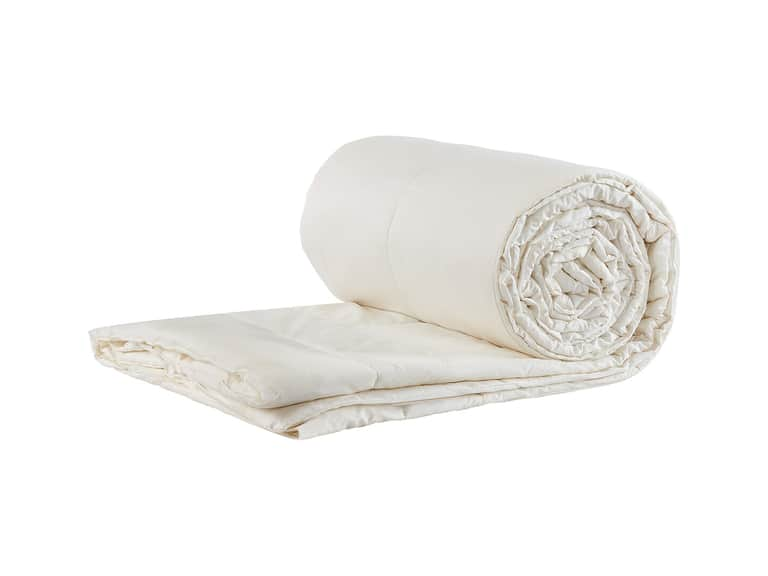
For a warm bedroom, a lightweight wool comforter may provide a covering without the sensation of a heavy insulating layer. Sleep and Beyond’s myComforter, for example, is described as a 100% washable-wool-filled comforter with a natural cotton sateen cover and a fill weight of 13 ounces per square yard. That specification offers a concrete point of comparison when evaluating bedding. It does not, by itself, establish that the comforter will feel right for every warm sleeper or climate; personal preference and the rest of the bedding still count.
In a colder room, the solution may be a more substantial comforter, but it may also be an additional blanket or a warmer sleepwear layer. The simplest test is to change one thing at a time. If you add a thick blanket, a heavier comforter, and warmer pajamas all at once, it becomes difficult to identify what improved the bed—or what caused it to become too warm.
Pay attention to repeat patterns rather than a single restless night. If you wake warm several nights in a row, try removing a layer, switching to lighter sleepwear, or adjusting the room before concluding that the comforter is wrong. If you consistently wake cold, add a breathable blanket or consider a warmer setup. Persistent night sweats or feeling unusually cold can have causes beyond bedding; when symptoms are new, severe, or concerning, consider discussing them with a qualified health professional.
A layering plan for shifting seasons
Layering gives you a way to fine-tune warmth without replacing the main comforter each time the forecast changes. Begin with the basics: a fitted sheet, a top sheet if you use one, and the comforter. Add a light blanket that can be folded at the foot of the bed. When the room cools, pull it up; when it warms, fold it back. This small adjustment can be more practical than keeping several bulky comforters within reach.
In spring and fall, the night can begin mild and turn cool before morning. A removable blanket lets the sleeper adjust coverage without changing the whole bed. In winter, a blanket beneath the comforter can add warmth, while a duvet cover helps protect the comforter from daily contact. During summer, the comforter may be replaced by a lightweight blanket or used only on cooler nights. The aim is a set of options, not a fixed seasonal rule.
Layers also help when two people share a bed but have different comfort needs. One person might prefer the comforter while the other uses a lighter blanket or leaves a side uncovered. Separate throws or blankets can make this arrangement easier, reducing the need to compromise with a single all-or-nothing layer. For adjustable beds, split bedding can also help each sleeper manage coverage independently.
Materials and texture influence the experience. A crisp cotton sheet, a smooth sateen cover, and a lofty blanket each feel distinct against the skin. If a bed feels too warm, removing a layer is often the first experiment; if it feels clammy, consider whether the room is humid or whether the bedding combination is trapping more heat than you prefer. Wool is commonly valued for moisture management and temperature regulation, but individual outcomes vary, and no fiber makes a bedroom immune to heat or humidity.
- For warmer nights: Use fewer layers and keep a light blanket nearby rather than adding it automatically.
- For cool shoulder seasons: Keep the main comforter in place and add a removable blanket for overnight temperature changes.
- For colder rooms: Add warmth gradually, checking how the full combination feels rather than relying on the comforter’s label alone.
- For different preferences in one bed: Consider separate blankets or throws so each sleeper can adjust coverage.
Caring for wool without over-cleaning it
Care starts with the label. Wool bedding is not a single standardized product: some comforters are designed to be washed at home, while others call for spot-cleaning or professional care. Even if the filling is described as washable, the shell, quilting, size, and machine capacity matter. Read the manufacturer’s instructions before putting a comforter in a washer or dryer. A generic rule can be a costly substitute for product-specific guidance.
A removable duvet cover is one of the simplest ways to protect the comforter. It takes the regular contact from skin, hair, and everyday dust, and it can usually be laundered more easily than the comforter itself. Confirm that the cover fits without pulling the comforter into an uneven bundle, and secure any ties or fasteners so the filling stays in place. The less often the comforter itself needs intensive cleaning, the less strain its construction is likely to face.
Between uses, airing the comforter can help it feel refreshed. Follow the care guidance: some manufacturers recommend airing outdoors or in indirect sunlight, while direct, prolonged sun exposure may be unsuitable for some fabrics or finishes. A dry, well-ventilated space is preferable to leaving bedding in a damp room. Avoid storing a comforter while it is even slightly moist, since trapped moisture can encourage unpleasant odors and may damage textiles.
For a small mark, first check the care instructions and test any cleaning approach in an inconspicuous area when appropriate. Use only a method compatible with the shell and filling. Scrubbing aggressively can spread a stain or distort the quilting. If a spill has penetrated the cover or the comforter needs a deep clean, the manufacturer’s recommended professional service may be safer than improvising with a full wash.
Washing can affect wool batting. Agitation, unsuitable detergents, excessive heat, or incorrect drying may cause shrinkage, felting, uneven fill, or damage to the shell. A comforter marketed as washable still needs the specified cycle, detergent, and drying method. Never assume that the settings used for sheets will be appropriate for a large wool-filled item. If the comforter is too large for the machine to move freely, a larger-capacity washer or professional cleaner may be necessary.
Storing a comforter between seasons
When the weather changes, clean the comforter according to its care instructions and let it dry completely before storage. Choose a breathable storage bag or cotton cover and place it in a dry area away from direct heat and moisture. Tight compression may save closet space, but prolonged pressure can leave a comforter flattened or misshapen. If you use a vacuum storage bag, check whether the manufacturer permits compression; do not assume it is suitable for wool fill.
Give the bedding room to recover when it comes out of storage. Lay it flat or drape it over a clean, dry surface, then allow it to air before making the bed. Inspect seams and quilting for loose threads or small openings. Addressing a minor repair early can help prevent fill from escaping or shifting. A comforter that smells musty, feels damp, or shows signs of pests should not go straight onto the bed; identify and address the storage issue first.
Choosing a setup you will actually use
The best seasonal bedding plan is not necessarily the one with the most precise-sounding specifications. It is the one that suits your bedroom, your habits, and your willingness to maintain it. Before choosing a wool comforter, check its dimensions against your mattress, note the fill weight if listed, confirm whether the cover is removable, and understand the care requirements. If you are comparing products, put the specifications side by side rather than relying on broad descriptions such as “all-season.”
It is also worth considering how the comforter will fit into everyday life. A washable design may be appealing, but washing instructions still deserve attention. A duvet cover can reduce routine cleaning, but it adds a layer to launder and change. A heavier comforter may feel reassuring in a cold room but cumbersome to handle. These are practical considerations, not minor details: the bedding that is easiest to care for is more likely to remain in regular use.
Wool’s appeal lies partly in its adaptability, but adaptability is a partnership between the material and the sleeper. The comforter supplies a layer of insulation; the room, sheets, clothing, and adjustable blankets determine how that insulation is experienced. For many households, a steady main comforter paired with one or two removable layers is a more flexible arrangement than a different bed for every season.
A short checklist before buying or changing layers
- Measure the mattress and compare it with the comforter’s dimensions.
- Look for a clear fill-weight figure, and check whether it is total fill or fill per area.
- Consider the bedroom’s usual temperature, including heating, sunlight, and drafts.
- Decide whether you prefer a removable duvet cover and confirm that it fits the comforter.
- Read the care label before purchasing, especially if home washing is important to you.
- Use a removable blanket to adjust warmth before replacing the main comforter.
- Keep a brief note of what you changed if you are trying to resolve repeated overheating or coldness.
A wool comforter does not need to be treated as a winter-only object or a promise of perfect temperature. Its usefulness depends on choosing a fill level that makes sense for the room, keeping the comforter protected, and adjusting the surrounding layers as conditions shift. With those decisions in view, seasonal bedding becomes less about guessing what the calendar demands and more about noticing what makes the bed comfortable tonight.
This article provides general bedding guidance, not medical advice. Follow the care instructions supplied with your specific comforter, and seek professional guidance for persistent or concerning sleep-related symptoms.